I offer walk and talk sessions in the outdoors, see ‘What Nick Offers‘ for details.

I offer walk and talk sessions in the outdoors, see ‘What Nick Offers‘ for details.
I recently purchased a pretty new but second hand ag bike to join a trip along the Oodnadatta Track with a group of friends.
The Yamaha AG125 is a farm bike, and I found out when I went to have it checked for registration that it is only a farm bike! It cannot be registered for road use in Australia.
So it was not able to be used for the outback trip, even though it is a capable and suitable piece of equipment.
I advertised the bike for sale online, thinking that there would be someone with a farm who would just love a farm bike with only 600 k’s on the clock, and for $1000 off the new price.
I got an enquiry from a young farmer in the middle of Tasmania who had discussed the matter with his partner and they had decided it was time for a new bike. Having a reliable purpose built farm bike on a farm makes a whole bunch of things easier.
I delivered the bike on the Nick Hall Adventure Therapy ute. It was a beautiful day for a countryside visit/tour and I had a great conversation with the new owner about bikes, and farming. I am always very impressed with farmers knowledge and understanding of the land and weather and growing conditions. It is actually very inspiring to find people so dedicated to, and informed about, what they do.


Farmers grow our food, this is what they do.
This makes them invaluable.


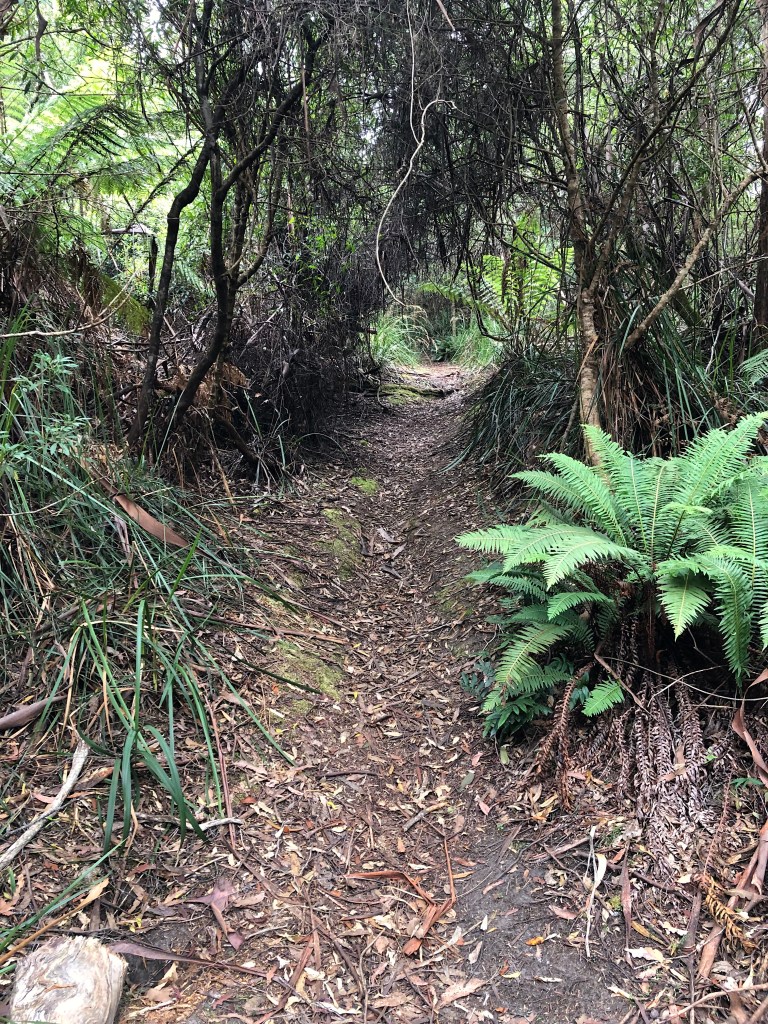
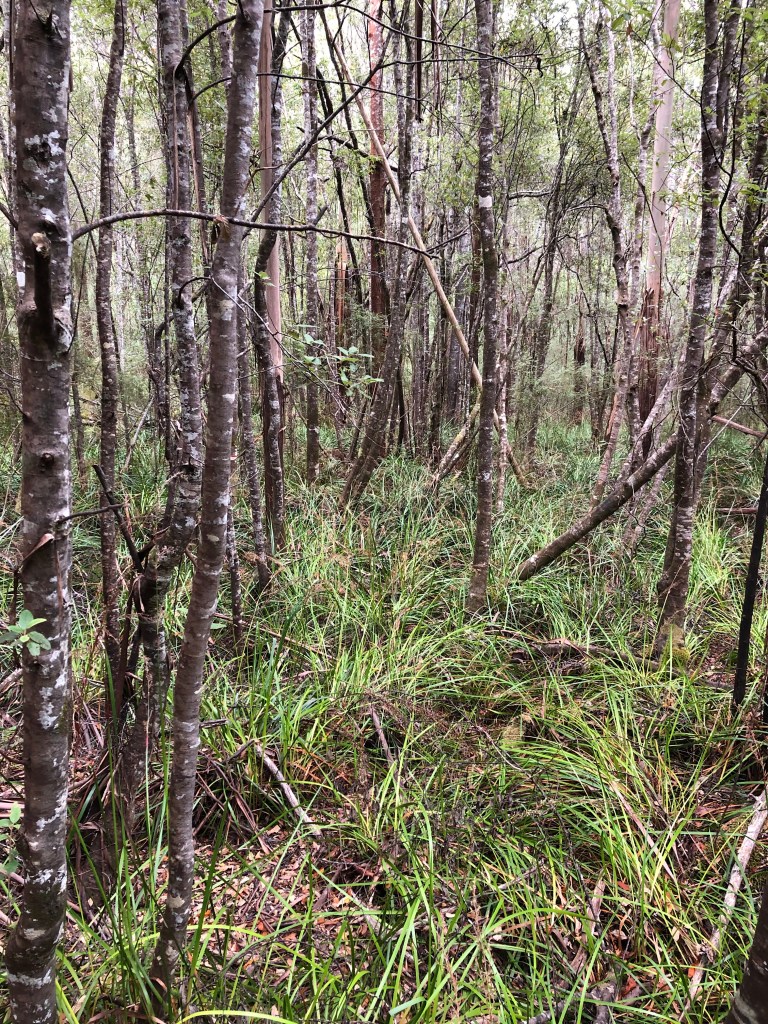
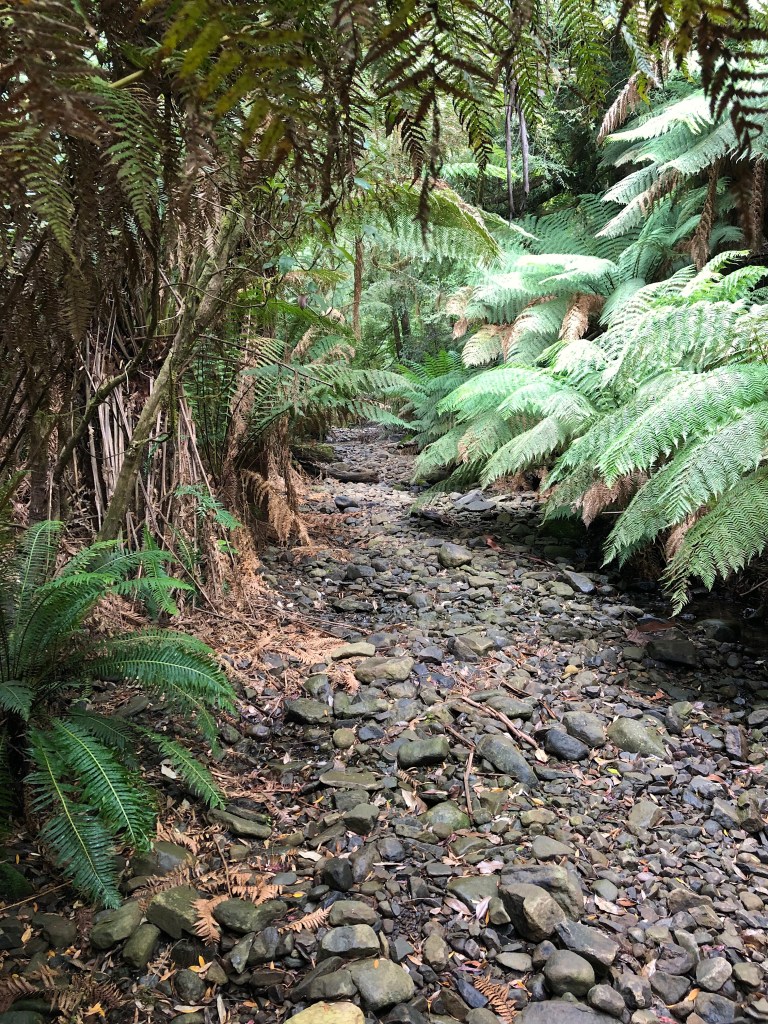
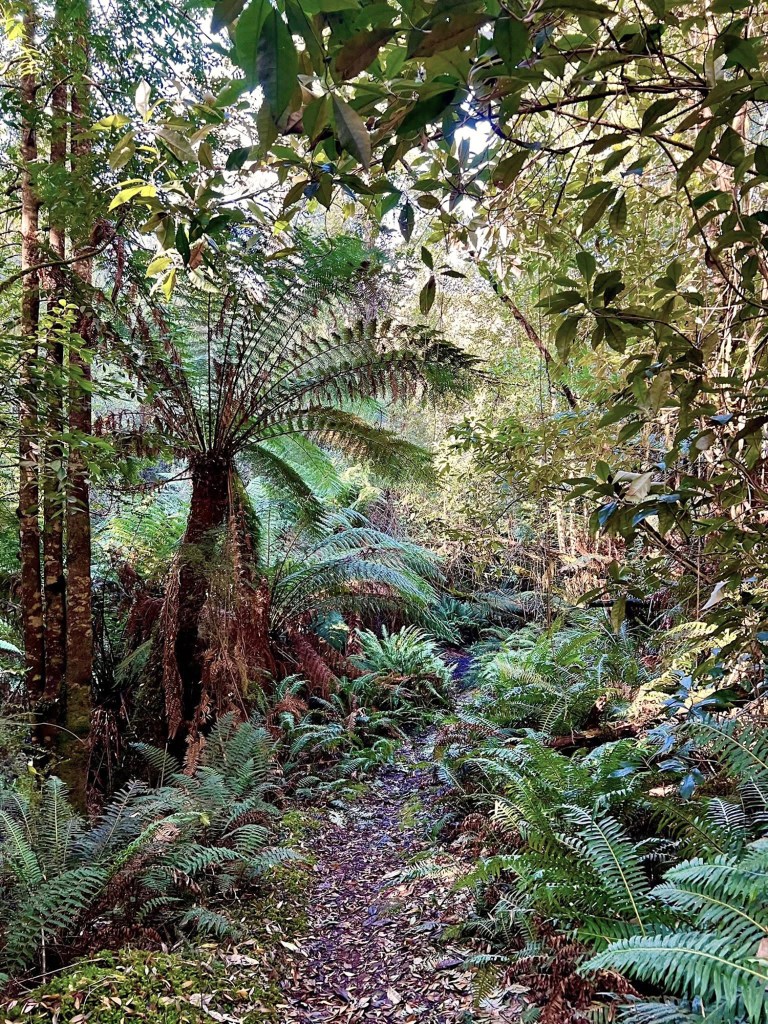
Forest bathing is a practice or process of therapeutic relaxation where one spends time in a forest or natural atmosphere (like an uncrowded coastline/beach), focusing on sensory engagement to connect with nature, and breathing in the air.
Forest bathing is also known as sylvotherapy, and, emanating from Japan, shinrin-yoku.
Sylvotherapy/Shinrin-yoku is a wellbeing and healing practice that involves mindful connections with natural places.
It promotes physical and mental well-being through activities like sitting or walking in a forest, sensory engagement, and even physically embracing trees to connect with their energy. Potential benefits include reduced stress, lower blood pressure, a strengthened immune system, and improved concentration and mindfulness.

In Japan, which is two thirds covered in forest, the term shinrin-yoku was created by Tomohide Akiyama, who was the director of the Ministry of Forestry, in 1982. After several studies were conducted in Japan during the 1980s, forest bathing was seen to be an effective therapy method. Akiyama knew of these studies along with the findings that showed the beneficial health effects of the compounds, such as phytoncides, and of the essential oils that certain trees and plants emitted. He officially put forward shinrin-yoku as a recognised practice, promoting its benefits to his public and establishing guidelines for its implementation.
Shinrin-yoku/forestbathing has been developed as a response to the increasing urbanisation and technological advancements and was put forth to inspire individuals to reconnect with nature and as a means to protect the forests and the natural lands. It was understood that if people spent time in natural forests and like places, and were able to find therapeutic comfort within them, they would value and protect them.

The Japanese calligraphy for Shinrin-yoku, forest bathing.
Practicing forest bathing/shinrin-yoku/sylvotherapy means spending time in nature, amongst the trees and grass, and mindfully engaging within a forest atmosphere or other natural environments. It is usually done by sitting in or walking through, a forest. Walking would be done at a slow and gentle pace. These practices would be done without carrying any electronics or other distractions, and taking the time to soak up the surrounding nature.
It involves using all five senses and letting nature enter through those senses. Some examples of exercising this can include:


Here are the slides from my recent presentation at the Outdoor Health Australia forum in Lennox Head, New south Wales, which turned out to be another very beautiful and exciting part of Australia.
“How To Be Not Overwhelmed (in Nature and Elsewhere.) The Restoration of Spontaneity.”
Mindfullness, nature contact, nature immersion, experiential, deep ecology, person centred.
Hi, I’m Nick Hall. I have been immersed in person centred adventure therapy since 1994. I now offer my private practice Nick Hall Adventure Therapy where we do walk and talk sessions, and small adventure therapy sessions canoeing, swimming, stand up paddle boarding and forest bathing. I have worked in adventure therapy groupwork, as a river guide, with torture and trauma victims, at the Aboriginal Health Service in Tasmania, and run my own groupwork program Community Rites Of Passage. I have presented internationally and around Australia. I am a foundation member of Outdoor Health Australia. I also present on empathy, high functioning group formation, and deep ecology.
This is an experiential workshop held in the outdoors. It focuses on learning to identify what overwhelm is and when it is occurring internally, and then moves to using this awareness to manage this situation, whether it occurs in an outdoor setting, or elsewhere in one’s life. This workshop is for anyone, of any experience, who wants to explore the functioning of overwhelm in themselves. It is intended to be a gentle exploration, an introduction.


Occasionally I get asked what I do on my days off.
All the normal stuff…
Well, my version of the normal stuff.
Today I was collecting firewood.


Soul Searching?
Carl Jung had much to say about the soul later in his life.
He was a victim of lifelong learning.
I can recall him saying in an interview something like “There is a treasure buried in the field.” He was talking about the existence of the soul, and how conditioning, and some of the workings of the human mind bury this fact, this reality. The reality of the soul.
In this he was not talking about the route of organised religion, which very much tends to bury truth in dogma and doctrine, mindless repetition. He was talking about our own personal search for our own personal soul, and what this means.
I found a quote, easily online, as one does.
“The most powerful weapon on earth is the human soul on fire. Don’t gain the world and lose your soul; wisdom is better than silver or gold. Everybody needs beauty as well as bread, places to play in and pray in, where nature may heal and give strength to body and soul.’
And then I thought to myself, also as one does, “Who said that?”
The next step in this moment in time tends to be ask AI.
The provided quote is a combination of phrases from two different people: “The most powerful weapon on earth is the human soul on fire” is attributed to Ferdinand Foch, while “Don’t gain the world and lose your soul; wisdom is better than silver or gold” is a quote by Bob Marley. The final sentence, “Everybody needs beauty as well as bread, places to play in and pray in, where nature may heal and give strength to body and soul,” is a quote from John Muir.
Ferdinand Foch
Bob Marley
John Muir
You may have noticed that I did not put quotation marks on this AI response. This is because this is not a quote, or someone’s work, it is a piece of data processing, a piece of essentially soulless writing, mournful numbers until the presence of the soul is added. Somewhere there is a soul involved.
How do we tell the workings of the soul apart from everything else?
For us there are two or three possibilities.
There is the technical world, the world of constructive and destructive cause and effect.
There are the workings of one’s mind.
There is the world of relationship and connection.
A mentor of mine described this as “Shit happens, little mind, and big mind.”
Little mind is our brain in our head.
Big mind is our wisdom, our clarity, both felt and put into language, our endless generosity as we move through life always open to learning new things.
Big mind is also our awareness that we are a part of everything. That we are, in fact, everything.
To be in touch in every moment with one’s soul, one’s big mind, it is necessary to free one’s self from the workings of little mind, isn’t it? To be passively aware of these workings, and learn and know, what is true, and what is false. What is wise and nurturing, and what is stupid and miserable.
How to achieve this?
Somewhere in you you may recognise this:
By wanting to achieve this, by being aware of your desire to be free of the workings of little mind, as little mind is only out for itself. And then doing absolutely nothing about this, so totally passive is the road to freedom, to peace.
And while one is waiting one can learn how to do things effectively, and how to be gentle in letting go, and how to be kind.
It may make sense that in letting go of what does not work, eventually, what is left is what does work, and this is the treasure to which Carl, and many others, refers. The treasure that is you, as part of everything, not separate from it. Real spirituality, not invented spirituality. Humble, and passionate, quiet and immense. Timeless. Beyond belief.

Canoeing on Browns Rivulet, Kingston.

Therapy dog Lexi wants to drive.

Talking with the Montrose Bay goose.

Walk and talk at Cornelian Bay, New Town.

GASP pink window got broken, now looks beautiful in a different way, Elwick.

A bandana from Project Hahn. The organisation where I learnt wilderness group work.

Yellow-tailed Black Cockatoos next to the track at Geilston Bay.

kunanyi from Risdon Brook Dam.

Gum tree in blossom, Dodges Ferry.

Therapy dog Billy on his day off.

How can I help?
I personally was caught in, and deeply affected by, the Dunalley fire of 2013.
Below is an account I wrote at the time, with some pictures.
I am surprised right now that this was seven years ago. My memories and emotions are as fresh as they were then. This for me is an indicator of how others have been affected, how they may be feeling, and how long they may be affected. This is no small or short term thing, of which I’m sure you have awareness. Recovery is now a big job, with no assurance that the situation will not get worse before it gets better. How to deal with something of this scale? Quality information on what those effected actually want/need could be a very good starting point.
What to offer from a therapy business/field in these unprecedented circumstances is something that I have been considering. In Tasmania we copped it last year and this year we have been more remote from the centres of the disaster. This on initial observation appears to mean that there are not many people directly effected seeking therapy solutions here. This of course is very hard to read and could change at any point. There is effect and potential trauma in being connected to those effected, by being a part of the national community, by exposure to media, and having been effected/affected in the past.
I offer myself as a practitioner (part of a nationwide group of such practitioners) who is capable of understanding the scope of the situation, and create safe space to talk about what happened and what is needed.
Some links for assistance:
Australian Government link: www.bushfirerecovery.gov.au
Red Cross link: www.redcross.org.au
This link to ABC RN Life Matters show 29/1/20 is a beauty, relevant to everyone, with a focus on children: www.abc.net.au/radionational/programs/lifematters/helping-children-come-to-terms-with-this-season’s-bushfires/11906806
AABAT (Australian Association for Bush Adventure Therapy) link: aabat.org.au/bushfire-recovery-resources/
My story from January 2013:
The Inala Road Fire.
There had been a bushfire on the horizon the night before. In the morning there was some smoke in the air, but no fire. We set up the boat, hooked it to our car and headed down to Marion Bay to get some surf. It was a warm morning that was quickly becoming hot. We found a nice half metre wave breaking right and left on the outside sandbar of the Boneyard, the name of the surf break at the Marion Bay Narrows. We surfed for an hour or so then up-anchored and cruised back to Boomer Bay, passing through curious and pleasant walls of increasingly hot air the closer we got to the boat ramp. Not a sign of a bushfire anywhere to be seen. At the ramp we went to our usual routine of securing and tidying the boat for the trip home. When we were almost finished I noticed that the people of the house nearest the ramp car park were scurrying about doing something. Once again, curious, I thought.

The hill in the background is the hill west of Dunalley, about an hour or so before the fire hit. No sign of a catastrophic fire.
We headed up the road to Dunalley to buy ourselves a pie or four, as some of the crew were very peckish. At the turnoff on to main road there was a policeman and his car. He said there was a bushfire, and the road back to Hobart was closed. We turned left, which was the way we were going anyway, and made for Dunalley to buy our pies. At Dunalley the bakery was closed, curious. We went to the small service station and store at the top of the rise. They have pies. And sure enough, they did. As we stared into the pie warmer the owner of the shop appeared from outback. His demeanour was at fever pitch. “Could we have some pies please?” “Are you crazy, the whole town is being evacuated, I can’t sell you a pie, you need to evacuate immediately like everyone else.” “It would be good if we could buy some pies first?” “No.” Out on the main road we met another friendlier man who asked if we had had a good surf, and said that everyone was evacuating to the hotel car park. We jumped in the car and headed in that direction. At the swing bridge that crosses the canal there was another police car, with a policeman attempting to give directions to an arrogant local ex-politician in a new sports car. We drove up the small rise out of the canal, and as I was about to turn into the hotel car park, which was already more or less full of cars and people, I looked in my rear-vision mirror. I could see the two tall hills that sit to the north of the town. Atop the hills was a plume of smoke as massive as any plume of smoke I had ever seen in pictures of volcanoes erupting. In front of the smoke was a wall of flames at least thirty metres high, and probably more like forty-five. This I had seen before. In nineteen sixty seven, when I was five years old, the very day that I first started school, my home town of Hobart was threatened from all directions by catastrophic wildfires that burnt up to and into the houses surrounding our city. That day I had travelled to town in the back seat of my mother’s car to pick up Dad from his workplace. We were taking him home so that he could join an army of similar fathers. They were to beat at the flames with wet hessian sugar sacks. They saved the town, those fathers with wet sugar sacks. I looked at the flames in my rear-vision mirror, and I thought, how exciting, how incredible, how very, very dangerous. I said to my young crew in the car, “We’re not staying here, I have seen this before, when I was a five year old boy, and it ends badly, we are going.” As we drove off toward the next town, Murdunna, I explained where I had seen this sort of incredible fire. As my family returned across the big high bridge that crosses the Derwent River at Hobart, back in nineteen sixty seven, I, sitting with my brother and some of my sisters in the spacious back seat of Mum’s Austin 1800, I looked around me to the hilltop horizon that adorns the city surrounds of Hobart with just such treed beauty. Atop of every hill, every hill, I could see flames rising, maybe thirty, maybe forty-five metres into the air. We pulled into Murdunna shops, and refuelled the boat and the car. A fully fuelled boat might be becoming useful. We bought ourselves some pies, and sat in the early afternoon heat outside the main store. By this time, back along the road, the fire had burnt through Dunalley township, jumped almost a kilometre across the bay to the south, and ignited the peninsula we were now on with the same ferocity with which it had arrived. Much of that town was now contained in the smoke plume. We could no longer see this smoke, and we did not know of the damage done. Car traffic passing the store began to increase, and one car pulled to the side of the road opposite. “The fire has jumped to this side, and is coming down the road” “Oh, thanks for letting us know.” We climbed back into our car and left. From the waterfront outside Taranna, two townships down, we watched across the bay. We could now see the enormous smoke cloud, which simultaneously, and unanimously filled us with a primal excited joy, and a gut stirring fear. The youngest of us, my sixteen-year-old son, appeared to be unsure of what he was looking at. “That’s Dunalley, the town we just left, that’s it, up in the air.” I explained, and then had to say it again before he realised what I was saying. We did not know that no one had died.

Our view of the fire from Taranna, as we evacuated to Port Arthur.
Nick Hall, 2013
My short story was included in the ‘pop-up’ Show+Tell January 2013 Bush Fires exhibition at the Forcett Hall (near where the fire started) on 19 and 20th November 2016. It took years for people’s personal stories to come out.
A few more pictures related to the story:

A picture taken by my wife from our family home in Dodges Ferry. As we evacuated from Dunalley to Port Arthur the rest of my family evacuated from Dodges Ferry to Hobart. We had minimal contact for three days as phone lines, mobile network towers, and power infrastructure were destroyed by the fire.

A view of the smoke cloud from the beach at Port Arthur. When we arrived we needed to tell people on the beach that a catastrophic fire was on it’s way.

We self evacuated by boat from Slopen Main Beach on the Tasman Peninsular back to my home in Dodges Ferry three days later. At the family shack at Port Arthur we had had to have hourly rotation of someone awake watching for smoke and fire throughout the nights. In the background is another boat evacuating. There was a large and constant flotilla of such boats over the three days of the fire.

The smoke cloud above Dunalley from Park Beach.

Alfie the therapy dog looking majestic after a walk and talk at Montrose Bay.

A pic from a few years ago. We are launching a friends Balinese sailing jukung at Midway Point.

Me meeting a quokka at Rottnest Island, Western Australia. They are quite used to people getting close. Yes, I had my promo tee shirt on for the shot.

Walking and talking in the tranquil surrounds of the Royal Tasmanian Botanical Gardens in Hobart. We spent some time checking out the bright coloured flowers in the nurturing space of the Conservatory.

A little panorama. Walking in Shag Bay at the East Risdon Nature Reserve on a warm day. Lots of Tasmanian birdlife to be encountered. We have seen over thirty species here.

Late season snow at Carr Villa hut, Ben Lomond National Park, Tasmania.

We paddled out together to Little Spectacle Island in our own kayaks. This activity builds self reliance in a safe environment. And it’s heaps of fun if you are up for it.

An adolescent blue tongue lizard looking for food on a hot day beside the track at Geilston Bay. We also see bronze skinks, and mountain dragons!

A summer’s day walk and talk on Park Beach, Dodges Ferry. Calming, reassuring, and mixed with the joy of being here.

Alfie’s sister Lexi doing her apprenticeship as a therapy dog on the coastal track at Lewisham. She is doing just fine.